Finding a domain name: a practical checklist
A good name is memorable, easy to say and easy to type. Here is how to evaluate your ideas.
Read guide ↗A personal domain can follow you from your first portfolio to independent work. What matters is whether people understand the address and whether you will still want to use it in a few years.
Start by comparing your first name plus surname with a hyphenated version. Choose the spelling that needs the least explanation when spoken and typed. Then check availability, possible name conflicts and annual total costs. Changing your profession should not immediately require a new address.

A personal domain is a natural starting point if people mainly look for you by name. It can connect a portfolio, a CV and eventually your own services. Still, consider who should use the address in three years: you alone, a shared practice or a growing team? A very personal name may be difficult to hand over to a business. Write down one sentence describing the intended purpose. “My central contact address for professional projects” leads to a different choice from “the name of our shared studio”. The domain does not have to describe every activity; your future website can do that.
More ways to choose an understandable domain nameThe patterns below are spelling examples, not domains that have been checked for availability. Read each version aloud as a web address and then as part of an email address. A hyphen can make the boundary in a long name clearer, but adds something you must say. An abbreviation saves characters while potentially creating questions about the missing letters. Do not choose solely because one version looks shorter on a business card.
| Pattern | Advantage | Check before buying |
|---|---|---|
| firstnamelastname.at | Your full personal name without separators | Is the boundary between the names clear? |
| firstname-lastname.at | A visible separation between both names | Will people remember to say the hyphen? |
| lastname.at | A compact address that might suit shared use | Does it clearly suit you or your family? |
Ask two people independently to write the address after hearing it once. Do not show them the spelling first. Compare the results and record every correction you needed to make. Repeat with a spoken email address: the part before @ and the domain need not repeat your full name unnecessarily. Also ask someone to type the longest option on a phone. This small exercise tells you more about everyday usability than an especially elegant wordmark. A good result is an address someone can pass on accurately without having your business card in front of them.

The .at namespace supports certain international characters. That does not automatically make an umlaut domain the best main address for your email. Check support with your chosen mail service and in the applications you actually use. Where relevant, compare an ae, oe or ue spelling. Adding your birth year, neighbourhood or current profession may produce an available variation, but can become unsuitable later. Avoid publishing personal details just to obtain a shorter address. If you expect a name change, consider how long you would need to keep an old address working. An alternative spelling should have a practical purpose, rather than merely filling your shopping basket.
Check the practical implications of umlaut domainsSearch for the chosen name with the ending you want. If it is taken, try a meaningful variation instead of appending random numbers. An available result is not legal clearance: also consider whether your presence could be confused with an existing name or service. Seek professional advice for a specific conflict. The wording of your domain is separate from its registration information. For individual holders, nic.at’s guidelines require the full first and last name. Use accurate contact details and an email address you can access; a stage name in a web address does not replace those details. Keep the registration information current as your circumstances change.
Check availability of your personal domainUnderstand domain ownership and technical accessA registered address does not come with a finished website or mailbox. You can connect it to a website or email service you choose. At atdomain.at you manage the domain and its DNS records; hosting and mailboxes must be arranged separately with a suitable service. Collect that service’s actual DNS instructions before connecting anything. Redirecting a second spelling to your main address also requires an appropriate setup. Buying both domains alone does not create a redirect. Keep control of your domain account even if someone else designs the portfolio, and store access information securely rather than relying on an informal handover.
Choose a domain for personal email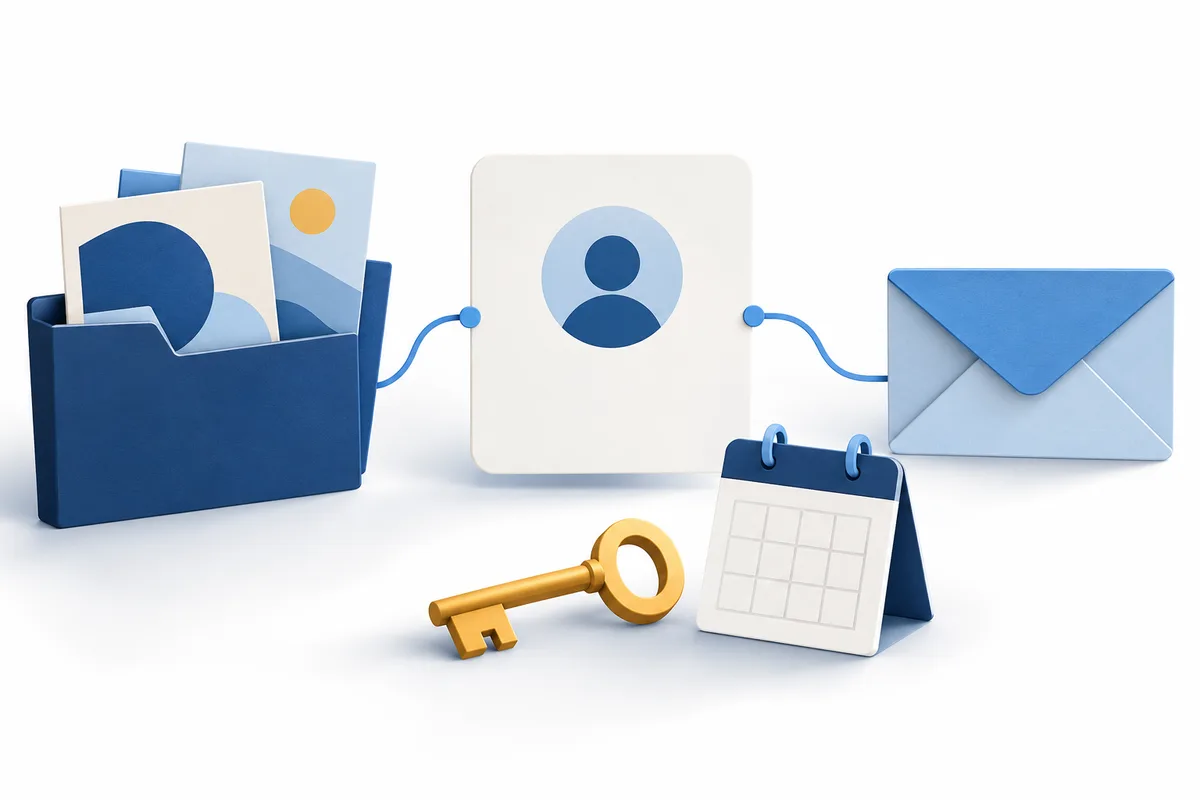
A standard new .at domain at atdomain.at costs €12.99 total for the first year, with renewal currently €15.99 total per additional year. Assuming unchanged prices, that is €28.98 over two years. Two such name variants cost €25.98 in the first year and a combined €31.98 per renewal year. Additional website or email services are not included. Buy a second spelling only for a specific reason and record which address you will use publicly. Check current prices before ordering and keep renewal dates with your other account records.
A good name is memorable, easy to say and easy to type. Here is how to evaluate your ideas.
Read guide ↗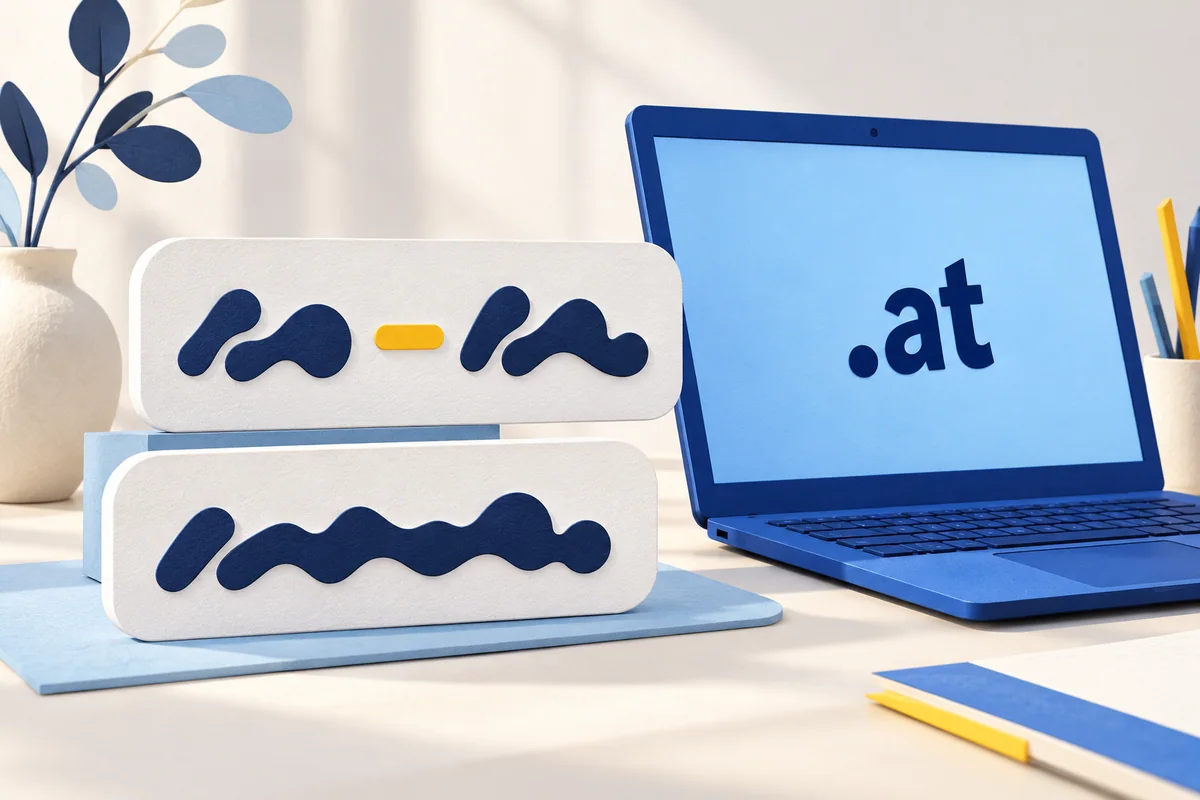
Choose a clear spelling for your Austrian domain. Compare readability, phone and email use, and the total registration and renewal prices for keeping one or two .at names.
Read guide ↗An address such as office@yourname.at needs a domain and an email service. Learn what the mailbox, MX, SPF, DKIM and DMARC each do.
Read guide ↗